
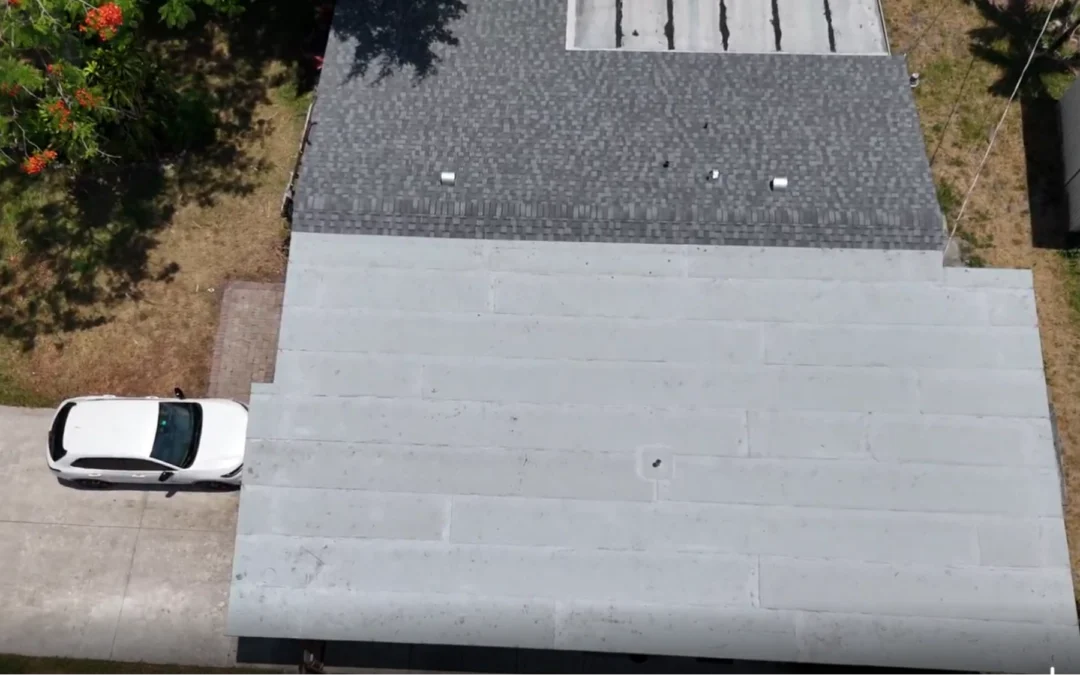
A flat roof maintenance program is a schedule of documented inspections and small repairs that catches problems before water reaches a tenant’s space. For Pompano Beach property managers, it keeps tenants dry, builds the maintenance record many manufacturer warranties expect, and turns surprise roof failures into planned budget lines.
If you’ve ever typed “commercial roofers near me” into your phone with an upset tenant on hold, you already know why that matters. The call usually comes after an afternoon downpour. A ceiling tile sags over a dental office’s front desk, or a puddle spreads next to a pallet of stock in a warehouse bay.
Below, we walk through what a good roof maintenance program looks like, from coatings and warranties to capital planning and reporting. The payoff is simple: fewer emergencies and better answers when ownership asks what the roof will cost next year.
Why a Leak in Tenant Space Is a Lease Problem Before It’s a Roofing Problem
Your tenant doesn’t care about the membrane. They care that their business got interrupted. Water over a server closet, a salon’s color station or a rack of inventory turns into a lease conversation within hours. Depending on the lease, that can mean rent disputes or a claim, and it lands on your desk long before a roofer’s invoice does. The cheapest leak is the one that never makes it through the deck.
Most flat roof leaks in South Florida don’t start in the middle of the roof. They start at the edges and penetrations: a cracked pitch pocket around an HVAC stand, a seam pulling loose where the membrane turns up a parapet wall, or a drain choked with leaves that turns the roof into a shallow pond after a summer storm. Rooftop trades cause their share too, like an HVAC tech who leaves screws behind for the next heavy rain to find. A maintenance program puts someone on the roof often enough to catch that damage while it’s still a small roof repair.
Coating and Restoration Versus Full Replacement: The Real Cost Comparison
A coating or restoration can make sense when the roof underneath is still sound. When it isn’t, it’s money poorly spent.
The real comparison is scope and disruption, not just two totals. A restoration usually means cleaning the surface, repairing seams and flashings, cutting out wet areas, and applying a coating system over the existing membrane. A full roof replacement means a tear-off, High Velocity Hurricane Zone permitting, and more noise and staging above occupied space.
The deciding factor is what’s happening below the surface. If the insulation is wet, a coating just seals the problem in. Core samples or a moisture survey can tell you that before you commit either way. How either option shows up in your budget is a question for your asset manager or accountant.
How a Preventative Maintenance Program Protects Your Manufacturer Warranty
It builds the paper trail. Many commercial roof warranties expect the owner to keep the roof maintained and to use qualified contractors for repairs, and when a claim comes up, the manufacturer may want to see what’s been done.
Picture two buildings with the same TPO roof and the same leak. One manager has dated inspection reports, photos of cleared drains, and records of seam repairs made with compatible materials. The other has a couple of invoices and a memory of someone smearing roofing cement on a seam. Guess which claim goes smoother.
How repairs are made matters as much as how often. A patch made with the wrong product can create a coverage problem of its own. Terms differ by manufacturer and system, so pull your warranty documents, read what they say about maintenance and repairs, and share them with whoever works on your roof.
What a Roof Condition Baseline Gives You for Capital Planning
It gives you evidence instead of guesses.
A baseline is a one-time, documented assessment of each roof. It records the system type and current condition, marks problem areas on a roof plan, photographs every drain, seam and penetration that needs attention, and gives an honest read on remaining service life. Across a portfolio, it shows which roofs need repairs now, which can be restored and which are heading toward replacement.
That changes the budget meeting. Instead of asking for emergency capital after a failure, you walk in with a forecast and photos to back it up. It can also help at insurance renewal, though what your carrier accepts varies, so check with them directly.
Scheduling Repairs Around Tenant Operations
Good commercial work gets planned around your tenants, not the other way around.
A restaurant with a lunch rush and a warehouse with trucks backing in all morning need very different plans. Before work starts, a commercial roofing company should walk the site with you and agree on crew arrival times, where materials and debris will be staged, which entrances stay clear, and when the noisiest work happens.
Then give tenants a heads-up. A short notice with dates, working hours, and a contact number heads off most complaints before they start.
What to Include in an Emergency Response Plan Before Storm Season
Hurricane season runs June through November, so the time to write your plan is spring, not the week a storm shows up in the forecast. A solid plan covers:
- A current roof plan for each property showing drains, scuppers, rooftop units and access points
- A pre-season inspection to clear drains, secure loose flashing and check that rooftop equipment is fastened down
- Your roofer’s contact information, including after-hours numbers, shared with on-site staff
- A post-storm checklist covering who goes up first, what gets photographed and who can approve temporary repairs
Temporary dry-in is the piece people forget to plan. After a storm, crews are stretched thin across Broward and Miami-Dade. Searching “commercial roof repair near me” the morning after is the worst time to start vetting contractors. You’re far better off with an existing relationship with an emergency roofing provider, plus pre-approved authority to tarp or seal. That can mean the difference between a dry office today and water damage all week.
What Ownership-Ready Reporting Should Actually Look Like
It should go straight to your asset manager without you rewriting a word.
Each report should show the date and who was on the roof, a plain-language summary, photos that make the location and condition obvious (with before and after shots for repairs), a clear recommendation and how urgent it is. What it shouldn’t be is a one-line invoice that says “repaired leak.” That tells ownership nothing and leaves you defending the spend on your own.
Frequently Asked Questions
How often should a commercial flat roof be inspected?
At least twice a year, plus after any major storm. In South Florida, schedule one in late spring, before hurricane season.
What does a commercial roofing inspection include?
A commercial roofing inspection checks the membrane, seams, flashings, drains, penetrations, and rooftop equipment curbs for damage or wear. A good one documents findings with photos and a written recommendation.
Can a roof repair void my manufacturer warranty?
It can, if the repair doesn’t follow the manufacturer’s requirements. Check your warranty documents for rules on approved materials and contractors before anyone works on the roof.
Is a roof coating worth it for a commercial building?
It can be, when the existing roof is dry and structurally sound. Test for moisture first.
How do I choose a commercial roofing company in Pompano Beach?
Start with an active Florida roofing license, proof of insurance, and real experience with flat and low-slope systems. Then ask for a sample inspection report.
Looking for Commercial Roofers Near Me? Start With a Plan, Not a Patch
Kover Solutions is a licensed roofing contractor (CCC1336298) based in Doral, working with property managers across Broward and Miami-Dade, including Pompano Beach, Fort Lauderdale, and Coral Springs. We help commercial owners and managers move from reactive repairs to planned maintenance, with scheduled inspections, condition reports written for ownership, and emergency support when storms hit. Our in-house media team means documentation is built into how we work.
If your Pompano Beach property is heading into another rainy season on a roof nobody has looked at in a while, a commercial roofing inspection is a good place to start. Contact Kover Solutions to schedule an inspection or a condition baseline.