
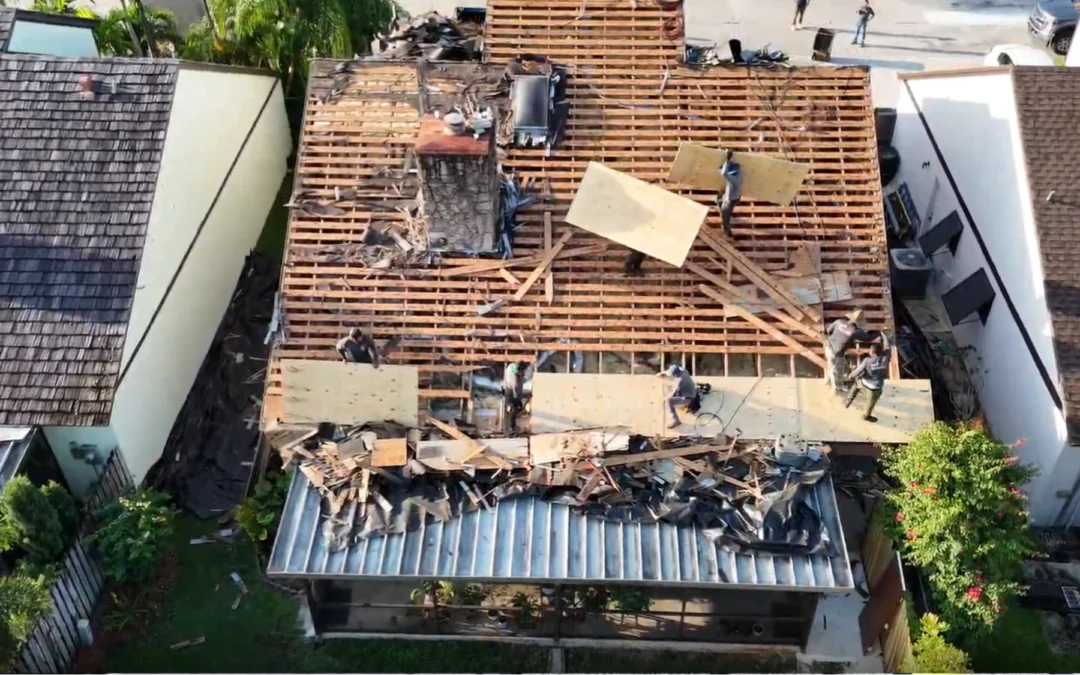
How can you tell if your roof took storm damage this season? Start with what you can see without a ladder: broken tile pieces in the flower beds, a new tea-colored ring on a bedroom ceiling, gritty granules piled at the bottom of a downspout, or a damp, musty smell in the attic after a downpour. Any one of those is worth a closer look. For a lot of homeowners, that’s where roof repair in Plantation and Hollywood really starts, weeks before a single drip lands on the floor.
Here’s the frustrating part. A roof can look fine from the driveway and still be letting water in, and October tends to bring other pressure too: an insurance renewal letter, or plans to list the house this fall.
This checklist covers what to look for, why timing matters with your insurer, what records help, and how to tell a simple fix from a roof that’s ready to retire.
Storm Damage That’s Easy to Miss From the Ground
The short answer: most post-storm damage hides under or between the roofing materials, not on top of them.
Take the concrete and clay tile roofs common in Plantation and Hollywood. The tile sheds water, but the real waterproofing is the underlayment beneath it. A tile can crack in a hairline pattern you’d never spot from the lawn, or slide an inch out of place, and wind-driven rain starts reaching that underlayment. Flat sections over a Florida room or garage addition show it differently, with puddles that linger for days or bubbles in the membrane. Flashing around vents can lift just enough to let water slip in.
Your post-season roof checklist (no ladder needed)
- From the yard: Look for tile fragments, shingle tabs, or ridge cap pieces in the grass. Stand across the street and check whether the ridge lines look straight.
- Gutters and downspouts: Check for granules, chunks of tile, or gutters pulling away from the fascia.
- Ceilings and walls: Look for yellow or brown rings, bubbling paint, or soft drywall, especially near corners and exterior walls.
- The attic: If it’s safe to step in, take a flashlight. Look for damp insulation, dark streaks on the wood decking, or pinpoints of daylight.
- During the next heavy rain: Listen for dripping, and recheck any stains you marked with a pencil to see if they’ve grown.
Please don’t climb up there yourself. Wet tile is slick, and cracked tile breaks underfoot. If water is coming in now, our emergency roofing team can help stop it first.
Why Waiting to Report Damage Can Cost More Than the Repair Itself
Waiting usually turns a small repair into a bigger one and can make a claim harder to support.
Water that gets past a cracked tile soaks the underlayment, then the plywood decking, then the insulation and drywall. A few replaced tiles can turn into rotted decking and mold cleanup. On the insurance side, every policy sets its own time limits for reporting damage, and many expect homeowners to take reasonable steps to keep it from getting worse. The longer you wait, the harder it can be to show what caused the damage and when. Check your policy or call your agent to find out what applies to you.
How Roof Age and Storm Damage Affect an Insurance Renewal
Here in South Florida, carriers look closely at roofs when a policy comes up for renewal. Roof age and condition both matter.
What each carrier looks for varies and changes over time, so your agent is the best source on your policy. Some carriers ask for an inspection or condition report before renewing an older roof, and unrepaired storm damage makes that conversation harder. Knowing your roof’s condition before the renewal letter arrives gives you time to fix problems and gather records without a deadline breathing down your neck.
What Documentation Your Insurer Will Actually Want to See
No universal list exists, but a few kinds of records tend to help:
- Dated photos of the damage, both wide shots and close-ups
- A written inspection report describing the roof’s condition and what was found
- Invoices and receipts for any emergency or temporary repairs
- A simple log of dates: when the storm hit, when you noticed the damage, and who you called
When Kover Solutions inspects a roof, we photograph what we find, so you have a record. Whether a document satisfies your carrier is their call, so ask your agent.
Roof Repair in Plantation and Hollywood: What to Expect Once Damage Is Confirmed
Timing depends on whether you have an active leak, whether a permit is needed, and whether materials are on hand.
An active leak comes first. A temporary dry-in, like a properly secured tarp, stops water while the permanent fix gets planned. Next comes a written scope explaining what’s damaged and what the repair involves. Broward follows High Velocity Hurricane Zone standards, and many roofing jobs need a permit from your city’s building department, so timing varies. Matching an older tile profile and color can add time too. Whether you searched for roof repair Plantation or roof repair Hollywood FL, Kover Solutions offers roof repair with a straight answer about what your roof actually needs.
What Buyers, Sellers, and Agents Should Know Before a Fall Listing
Post-season roof damage tends to surface at the worst moment in a sale.
The buyer’s inspector will check the roof, and the buyer’s insurance quote often depends on its age and condition. Sellers can get a pre-listing roof review and decide whether to fix or price in any issues before they turn into a renegotiation. Buyers should ask for roof records, permits and repair invoices. For agents, a written condition report early on gives clients facts instead of guesswork.
When It’s Time to Stop Patching and Start Planning a Replacement
Repair is often the right call. Some signs, though, point toward planning ahead:
- Leaks keep coming back in the same area after repairs
- Cracked or slipped tiles show up across the whole roof, not just one section
- The decking feels soft or shows widespread water damage
- The underlayment beneath the tile is nearing the end of its life
None of this means you need a new roof tomorrow, just that it’s time to plan instead of reacting after every storm. Our roof replacement page explains the process, and regular roof maintenance helps you get the most out of the roof you already have.
Closing Out the Season Before It Becomes Next Year’s Leak
A walk around the yard, a look at your ceilings, and a peek into the attic can tell you a lot. A documented inspection tells you the rest.
Kover Solutions is a licensed roofing contractor based in Doral, serving homeowners across Broward and Miami-Dade, including Plantation and Hollywood. If something on this checklist caught your eye, reach out to schedule a post-storm roof inspection with photos of what we find. Agents getting a fall listing ready can contact us for a pre-listing roof review, too.
Frequently Asked Questions
How do I know if my roof has storm damage if there’s no leak?
Check for debris in the yard, granules in the gutters, ceiling stains, and damp attic insulation. A professional inspection can find cracked tile and lifted flashing you can’t see from the ground.
Should I get a roof inspection after hurricane season even if nothing looks wrong?
Yes, especially if your roof is older or your renewal is coming up. Damage under tile often isn’t visible, and an inspection gives you a dated record.
Can I still report storm damage I found weeks later?
It depends on your policy. Every policy sets its own reporting time limits, so read yours or call your agent as soon as you find damage.
How do I find roof leak repair near me that I can trust?
Choose a licensed, insured local contractor with a physical address. You can verify a Florida roofing license through the state’s online lookup, and ask for a written scope and photos before work begins.
Do I have to fix roof damage before selling my home?
Not always, but unrepaired damage can affect the buyer’s inspection, insurance quote, and negotiation. Talk with your agent about disclosure and whether to repair or adjust the price.