
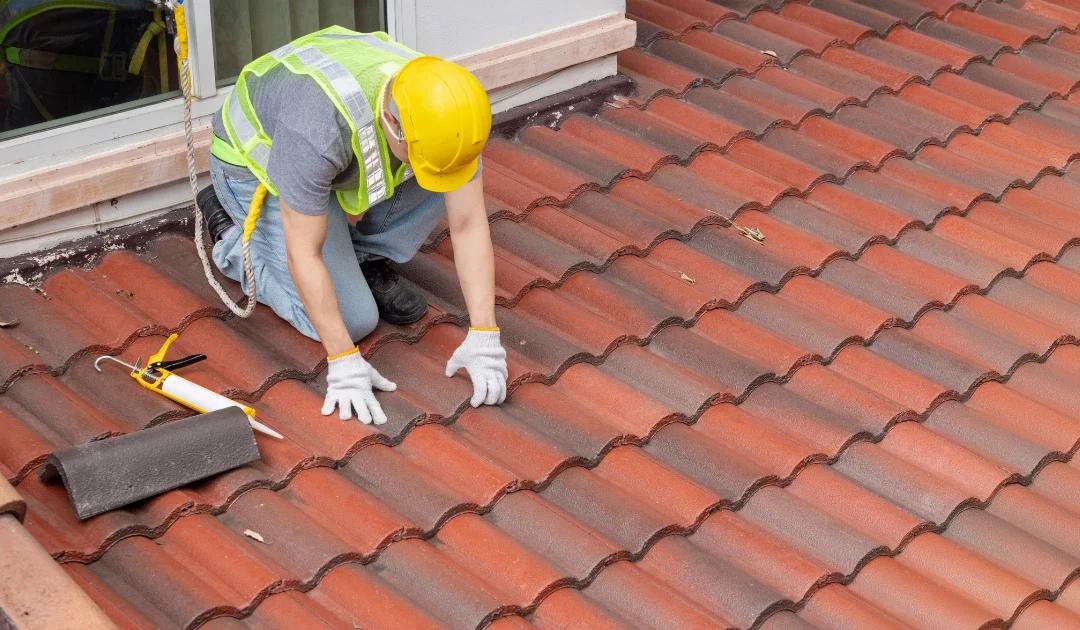
You spotted a cracked tile from the driveway. Or a small brown ring showed up on the bedroom ceiling after last week’s downpour. Or your insurance renewal arrived with a question about roof age, and now you’re staring at a roof you’ve never thought about and wondering what it’s going to cost you.
If you own a home in Fort Lauderdale, Plantation, Coral Springs, Doral, or anywhere else across Broward and Miami-Dade, there’s a good chance that roof is concrete or clay tile. Tile is tough, but it isn’t invincible, and the hardest part for most homeowners isn’t the repair itself. It’s not knowing whether a couple of broken tiles means a quick fix or the start of a much bigger bill.
Here’s the short answer: most tile roof problems can be repaired without replacing the whole system. Individual tiles crack, slip, or go missing, and experienced tile roofers can swap them out and reseal the area. A full re-roof usually comes into play only when the underlayment beneath the tiles has worn out, which tends to happen long before the tiles themselves fail.
This post walks through why tile dominates here, what actually damages it, how to tell repair from restoration from replacement, what High Velocity Hurricane Zone rules mean for the work, and how to keep a tile roof going for decades. By the end, you’ll know what to look for and what to ask before anyone climbs a ladder.
Why Do So Many South Florida Homes Have Tile Roofs?
Tile is everywhere from Hollywood to Pompano Beach because it handles our climate better than almost anything else. Concrete and clay don’t rot, don’t feed mold, and shrug off the kind of sun that bakes asphalt shingles into brittle curls within a decade or two. Tile also carries real weight, which helps it stay put when wind starts pulling at a roof.
There’s a design side too. Barrel tile fits the Mediterranean and Spanish styles that fill neighborhoods across both counties, and flat tile suits the newer construction going up in Doral and western Broward. When a whole street was built with the same roof in the same year, which is common here, you’ll often see neighbors dealing with the same tile issues at the same time.
The catch is that tile is a two-part system. The tiles you see are the armor. Underneath them sits a waterproof underlayment, and that layer is what actually keeps water out of your house. Tiles can last 40 or 50 years. The underlayment usually doesn’t.
What Causes Cracked, Slipped or Missing Tiles?
The most common causes are foot traffic, storm debris, thermal movement, and simple age. Here’s how each one shows up.
Foot traffic tops the list. Every time a satellite installer, a pressure-washing crew, or a well-meaning homeowner walks across a tile roof the wrong way, tiles crack under the load. You usually won’t notice until rain finds the hairline fracture months later.
Storms do the obvious damage. A palm frond or a piece of a neighbor’s fence hits the roof at speed and shatters a tile outright. Wind can also lift tiles that were never properly fastened, and once one slides out of position, the ones around it lose support.
Then there’s the slow stuff. Tiles expand in the afternoon heat and contract when a summer storm drops the temperature 20 degrees in ten minutes. Over years, that movement works fasteners loose and wears at the mortar or foam holding ridge and hip tiles in place. Add algae and debris trapping moisture in the valleys, and you’ve got the ingredients for a leak that seems to come from nowhere.
Roof Tile Repair or a Full Tile Re-Roof: Which One Do You Actually Need?
If the damage is limited to a handful of tiles and the underlayment underneath is still sound, roof tile repair is the right call. If water is getting through in multiple areas or the underlayment is brittle and cracking, you’re looking at a re-roof, even if most of the tiles look fine.
That distinction matters because the tiles and the underlayment age on completely different clocks. A roof from the early 2000s might have tiles with decades of life left sitting on top of a felt underlayment that has already given up. Replacing the broken tiles on a roof like that is a bandage. The water will just find the next weak spot.
A proper inspection sorts this out. A good contractor will lift tiles in a few spots, check the condition of the underlayment and flashing, look at the valleys and penetrations where most leaks start, and photograph what they find. At Kover Solutions, a Doral-based licensed roofing contractor working across Broward and Miami-Dade, that documented inspection is the starting point for every job, because the honest answer is sometimes a small repair and sometimes it isn’t. You can read more about how roof repair and roof replacement differ on our service pages.
One more option sits in between: a tile lift and relay. If the tiles are in good shape but the underlayment is done, the crew removes the tiles, installs new underlayment, and reinstalls the original tiles. It costs less than new tile and keeps the look of the house intact.
How Do You Know When a Tile Roof Is Due for Restoration?
A tile roof is due for restoration when you’re seeing widespread, repeated problems rather than isolated ones. Think several slipped tiles across different slopes, mortar crumbling off the ridge line, moss or algae staining that keeps coming back, and small leaks that get patched and reappear somewhere else.
Tile roof restoration usually means a combination of things: replacing damaged tiles, rebedding and repointing ridge and hip tiles, resealing flashing, clearing valleys, and cleaning the whole surface. It’s more than a repair but well short of a re-roof, and on the right roof it can add years of service.
Age is the other signal. If your roof is in that 15-to-25-year window, the tiles are probably fine, but the underlayment is entering the zone where it fails. That’s also the window where insurance carriers start asking questions. Requirements vary by carrier, so check directly with yours, but a documented inspection showing the roof’s actual condition gives you something concrete to hand them.
What Does High Velocity Hurricane Zone Code Mean for Tile Repairs?
Miami-Dade and Broward sit inside Florida’s High Velocity Hurricane Zone, which means roofing materials and installation methods have to meet stricter wind and impact standards than most of the country. For tile, that affects which products are approved, how tiles are fastened or adhered, and how the underlayment is installed.
For a small repair, the practical impact is that replacement tiles and adhesives need to be approved products, not whatever is on a hardware store shelf. For larger work, a permit is generally required, and the exact threshold varies, so it’s worth a call to your local building department. A contractor who tells you a permit “isn’t necessary” for a job that clearly needs one is handing you a problem you’ll meet again at resale or on an insurance claim.
None of this should scare you off. It’s the reason a properly done tile roof here survives storms that peel shingles off houses elsewhere. It just means the person doing the work needs to know the rules.
Tile Roof Maintenance That Adds Years to Your Roof
A little tile roof maintenance goes a long way, and most of it is about staying off the roof and keeping water moving.
Have the roof inspected once a year, ideally before hurricane season kicks off in June. Get the valleys and gutters cleared of leaves, seed pods, and the grit that washes down off the tiles. Trim back any branches hanging over the roof, both for debris and because squirrels use them as a bridge. If algae staining bothers you, skip the pressure washer; high pressure cracks tiles and blasts the protective surface off them. A soft wash by someone who knows tile is the safer route.
Keep an eye on the ridge and hip lines from the ground. Crumbling mortar there is an early warning you can catch before it turns into displaced tiles. And after any named storm, do a walk around the house looking for tile fragments in the yard or on the driveway. If you find some, don’t wait for the leak. Our roof maintenance page covers what a scheduled inspection includes.
Why Tile Roofs Need Tile Roofers, Not Just Any Roofer
Tile is its own trade. Walking on it without breaking it, matching a discontinued tile profile, knowing when a foam-set ridge can be repointed versus rebuilt, and installing underlayment to HVHZ standards are skills that come from doing tile work over and over, not from a shingle crew picking up an extra job.
Kover Solutions works on concrete and clay tile across Broward and Miami-Dade and approaches every roof inspection first, with photos and video so you can see exactly what we found and why we’re recommending what we’re recommending. Sometimes that’s a handful of tiles and a resealed valley. Sometimes it’s a lift and relay. Either way, you’ll know before you spend a dollar.
Frequently Asked Questions
Can you replace just a few broken roof tiles?
Yes, individual tiles can be replaced without touching the rest of the roof, as long as the underlayment beneath them is still in good condition. The contractor removes the broken tile, checks what’s underneath, and sets a matching replacement.
How long does a tile roof last in South Florida?
Concrete and clay tiles often last 40 to 50 years, but the underlayment beneath them typically needs replacing sooner, commonly somewhere in the 15-to-25-year range depending on the material used. The underlayment usually determines when a re-roof is needed.
Is a leaking tile roof an emergency?
An active leak should be handled quickly, because water inside the ceiling spreads to drywall, insulation, and framing within days. If water is coming in now, Kover Solutions offers emergency roofing response to dry the area in before the permanent repair is scoped.
Do I need a permit to repair a tile roof in Broward or Miami-Dade?
It depends on the scope of the work. Minor repairs may fall below the permit threshold, while larger repairs and any re-roofing generally require one. Confirm with your local building department, and be cautious of any contractor who skips the question.
Can I pressure wash my tile roof?
It’s best not to. High-pressure water cracks tiles, strips their protective surface, and can force water under them. A low-pressure soft wash is the safer way to remove algae.
Ready to Find Out What Your Tile Roof Actually Needs?
If you’re in Fort Lauderdale, Plantation, Coral Springs, Pompano Beach, Hollywood, Doral, or the surrounding Miami-Dade area and you’ve got cracked tiles, a ceiling stain, or an insurance letter sitting on the counter, start with a documented inspection. Contact Kover Solutions to schedule one. We’ll show you what we find, tell you plainly whether it’s a repair or something more, and help you get it handled before the next storm does the deciding for you.